

班加羅爾訊:美國特朗普政府於周四(10月8日)宣布暫停八間大型科技公司參與一項重要的美國移民計畫,該計畫允許雇主為外國勞工申請永久居留權,指稱移民制度存在濫用情況。
受影響的公司包括四間印度IT巨頭——Tata Consultancy Services(TCS)、Infosys、Wipro 同HCLTech,以及微軟、Adobe、Cognizant 與 Capgemini。
美國勞工部部長 Keith Sonderling 表示,當局將停止接受新申請,並暫停處理永久勞工認證(PERM)計畫下的待辦申請。
根據 PERM 計畫,僱主必須先證明在美國沒有合格的美國工人可胜任該職位,這是申請程序的前提條件。
印度外交部在週五的一項聲明中表示,這些限制並未「促進兩國的共同目標」。聲明補充稱,這次舉措可能影響符合資格的工人申請綠卡的機會,但不影響現有的 H-1B 簽證持有人。
印度 IT 產業機構 NASSCOM 強調,該計畫涉及永久移民,與用於臨時勞工的 H-1B 簽證計畫不同,而後者不受此次暫停影響。
分析師告 CNA,對印度 IT 企業的直接影響可能有限,但若限制長期化,將可能推高人手成本,並干擾員工在美定居的計劃。
「我認為這比起短期的商業中斷,對人才留任的影響更大,對印度 IT 企業而言尤是如此,」分析機構 HFS Research 的執行研究主管 Achyuta Ghosh 表示。

Pareek Jain, CEO at EIIR Trend, a research firmthat tracks the global engineering and IT services industry, estimated that hiring in the US was 25 to 50 per cent more expensive than sending Indian employees there, depending on the role.
對印度科技工作者的影響
Sarbojit Mallick, chief business officer at recruitment platform Instahyre, said the biggest impact on Indian workers was the loss of a “predictable path to permanent residency” in the US, rather than immediate visa cancellations.
Ghosh of HFS Research expects any shift to be gradual.
「我不預期在未來六到十二個月內會出現大規模回流(到印度),」他說,並補充指出,長期的不確定性可能逐步把經驗豐富的印度科技人員導向在國內的機會以及其他全球樞紐。
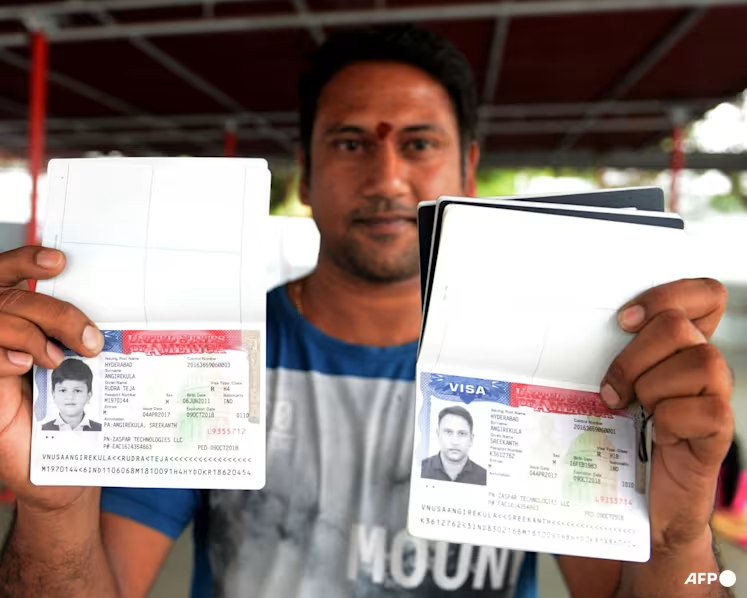
Pareek Jain, CEO at EIIR Trend, a research firm that tracks the global engineering and IT services industry, estimated that hiring in the US was 25 to 50 per cent more expensive than sending Indian employees there, depending on the role.
WHAT IT MEANS FOR INDIAN TECH WORKERS
Sarbojit Mallick, chief business officer at recruitment platform Instahyre, said the biggest impact on Indian workers was the loss of a “predictable path to permanent residency” in the US, rather than immediate visa cancellations.
Ghosh of HFS Research expects any shift to be gradual.
“I don’t expect a mass return (to India) over the next six to 12 months,” he said, adding that prolonged uncertainty could gradually redirect experienced Indian tech workers towards opportunities at home and other global hubs.

Overseas postings have long helped Indian IT companies attract and retain talent despite relatively low entry-level salaries, said Jain of EIIR Trend.
“If the option of global (job) mobility is gone, it will be difficult for them to attract good talent (at home),” he added.
The companies may have to develop opportunities in other overseas markets instead, he said.
Ghosh said Singapore and the United Arab Emirates could attract some experienced Indian professionals, but their tech job markets were “considerably smaller” than India’s.
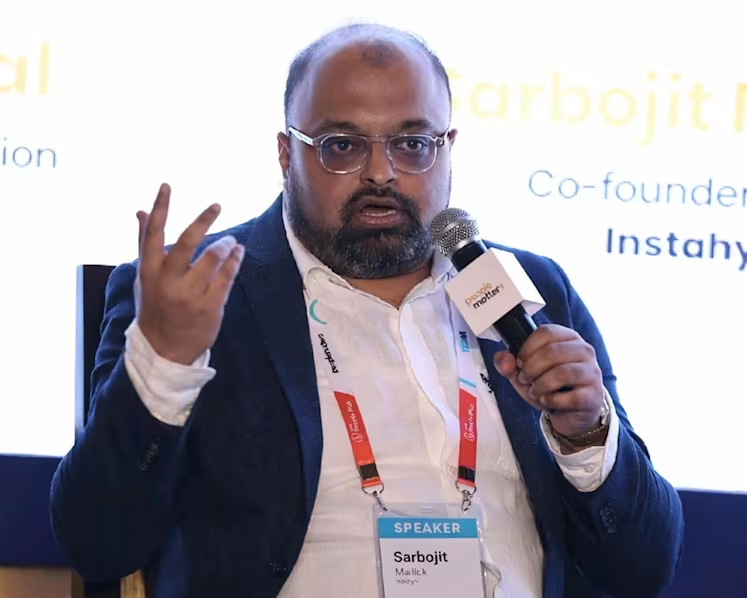
Mallick said that Singapore could attract experienced Indian professionals in AI, fintech and tech leadership, while Malaysia could benefit from talent in cloud, cybersecurity and engineering.
He said returning professionals should not assume that years of US-based work experience will translate into an equivalent job in India.
“India can absorb specialised talent, but not necessarily every returnee at comparable seniority and pay.”
Mallick said that opportunities were strongest in global capability centres (GCCs), product engineering, AI infrastructure, cybersecurity and cloud computing.
The rapid adoption of AI is widening the divide between demand for specialists and generalist developers, Mallick said.
He cited industry data showing recruitment for AI and machine-learning roles rose 45 per cent in the financial year 2025-26, while overall IT hiring remained flat.
“Demand for specialists does not guarantee enough equivalent roles for generalist developers and traditional IT services professionals,” Mallick said.