

我而家坐喺一輛四輪驅動車(4WD)嘅後座,露營裝備喺後車廂咯咯震動,車輛喺一條幾乎好似不存在嘅路上顛簸著。
喺未來四日,我預計大約要喺公路上行駛約970公里,另有230公里係越野路段;而後者,冇乜優雅嘅形容詞可以描述到。
大約行到車程八個鐘頭時,透過擋風玻璃同我望喺旁邊嘅窗,我只見到濃密嘅塵埃,逐漸視線變得模糊,我不禁懷疑司機喺近乎零能見度嘅情況下駕駛嘅自信,直到我哋突然急停。
塵土落定需要幾秒,視野才重新浮現。眼前係一條80米高嘅懸崖喺我哋下面,而遙遠地平線延伸嘅係廣闊嘅 Tuzbair 鹽原嘅白色大海。
“We’re here!” says Arailym, our 25-year-old Kazakh guide, as though we have simply pulled up outside a hotel.
星空下嘅野外露營
事實上,呢種情況都可以話係咁:呢度係我哋喺哈薩克西部偏西嘅曼格斯塔州,跟 Red Maya Travel 一齊嘅探險旅程嘅第一個露營地。
我喺阿克陶(Aktau)呢個臨海港口城市遇見 Red Maya 團隊,阿克陶係通往曼格斯塔嘅大門。旅客可以經由伊斯坦布爾或迪拜等國際樞紐轉機,亦可飛往阿拉木圖或阿斯塔納再轉乘國內航班。
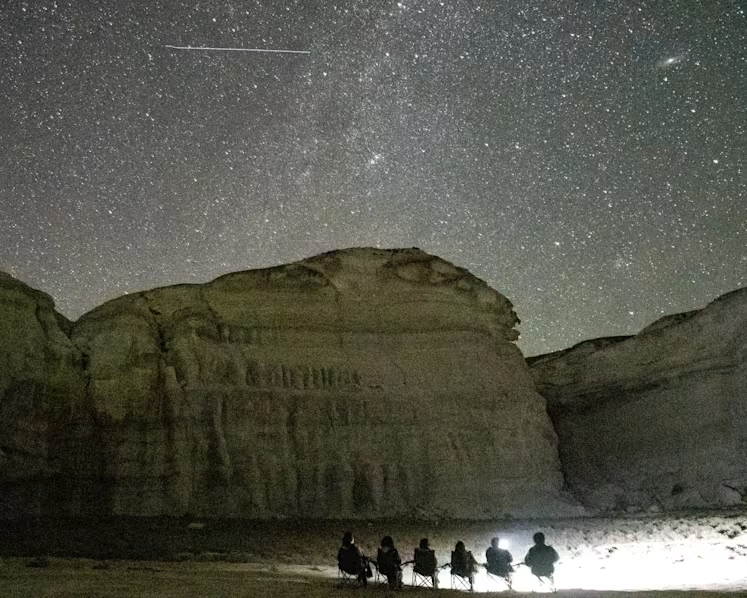
日落前,車隊嘅司機已經做咗廚師,喺我哋三輛4WD之一後方嘅臨時船台上煮雞肉麵,導師同我哋就喺地毯上仰卧,仰望夜空,銀河如同灑落喺天空。
位於咸海同烏斯季特高原之間,一大片廣闊且乾燥嘅高原,橫跨哈薩克、烏茲別克斯坦同土庫曼斯坦嘅部分地區;曼格斯塔州大部分地區,喺數百萬年前就位於現今已滅絕嘅特提斯海之下。
作為潛水者,走遍世界去潛水,竟然喺全球最大嘅內陸國度抵達,卻發現自己站喺曾經嘅海床上,呢種荒謬而又愉悅嘅感覺,真係令人啟發。
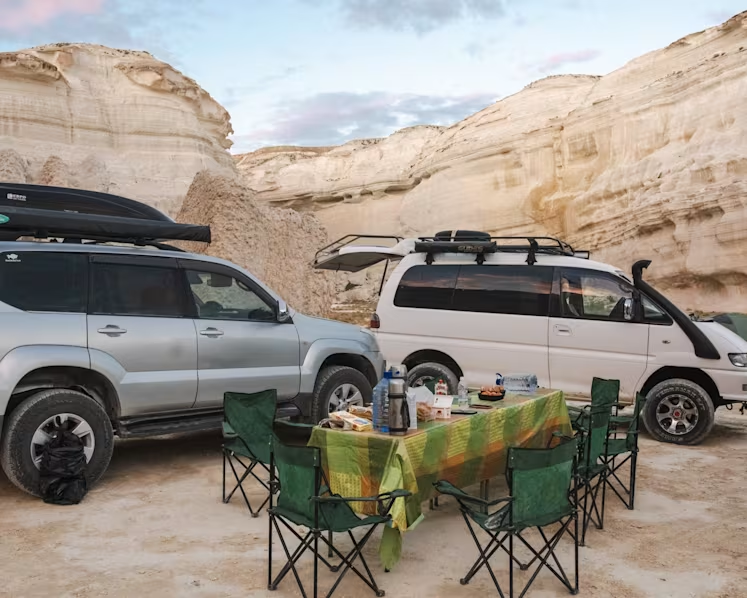
Marine life once thrived here and the region’s rocks still contain fossils and traces of prehistoric sea creatures, including shells, ammonites and shark teeth.
The Tethys deposited layers of sediment that geological upheaval eventually exposed as chalk, limestone and clay formations now sculpted by wind and water over unfathomable stretches of time.
侏羅紀岩層與地下清真寺
喺托里什第二日清晨,我哋會見到成百上千個巨型石球,幾乎係從天而降咁散落喺呢片只有幾十公里寬嘅沙漠上。
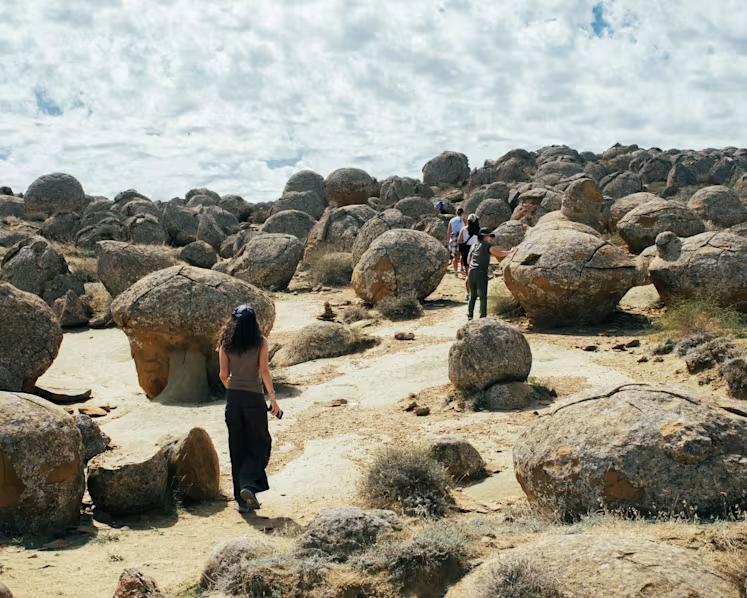
Some are almost perfectly round, others cracked open, and some as large as a tractor.
“These are concretions,” explains Arailym. “They are geological formations that formed within ancient sediments and were later exposed as erosion stripped away the surrounding rock.”
The further we travel through Mangystau, the harder it becomes to separate the spectacular from the historical.
At Kokala, the earth changes palette completely and the desert is suddenly streaked with colour. Layers of Jurassic clay appear in shades of white, crimson, purple and greenish grey, weathered into ridges, columns, gullies and miniature canyons dating back around 200 million years, when dinosaurs walked this land.
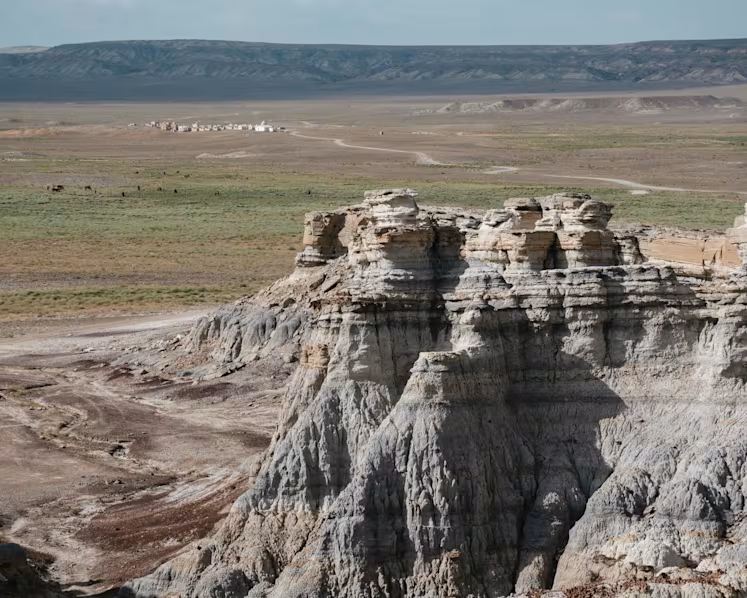
But the story of Mangystau did not end with the retreat of the sea. Over the centuries, people learnt to navigate, inhabit and make meaning from this unforgiving landscape.
The ancient Silk Road once crossed the region, connecting Central Asia with the Volga Valley, the Caucasus, Persia and, ultimately, the wider world.
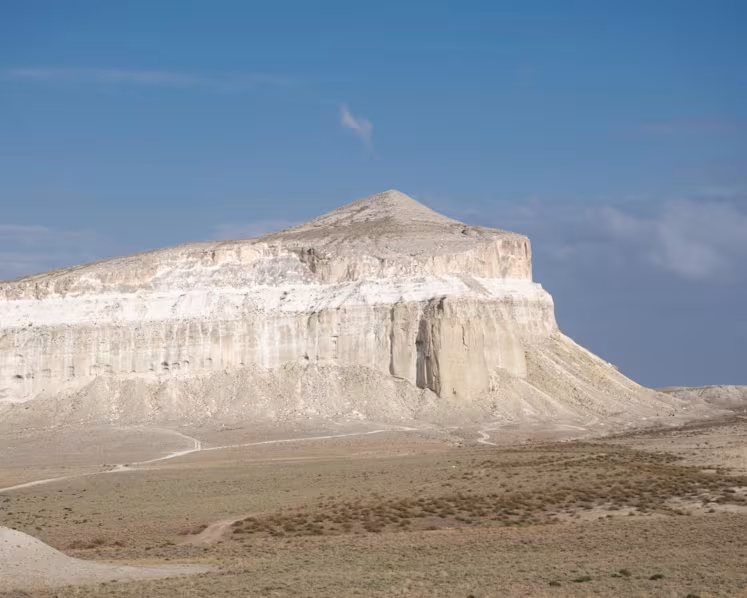
Sherkala, a solitary, yurt-shaped 308m mountain, is a reminder of this history, with local legends telling of Kazakh soldiers who held its summit against Turkmen forces after creating a passage through the rock to bring food and water to their position.
The underground mosques of Mangystau, five of which have been recently inscribed on the UNESCO World Heritage list, are perhaps the most profound expression of that relationship.
Tracing the early spread of Islam through the region, these places of worship were carved directly into its soft limestone and chalk, where the boundary between architecture and geology almost disappears.
The landmarks are dramatic, but it is the enormous distances between them that make Mangystau feel so remote.
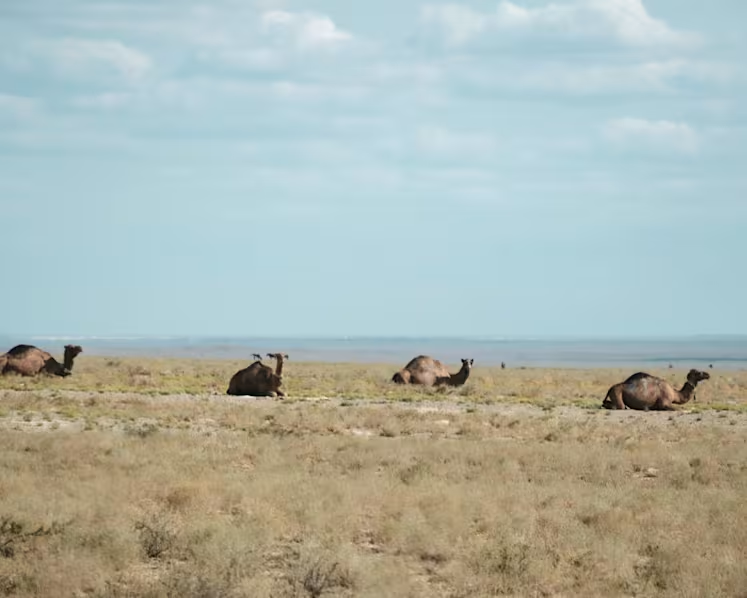
We spend hours driving through open country, passing the occasional herd of double-humped camels or wild horses, or stopping at an oasis for water.
For four days, there is almost no phone signal, yet the changing colours and rock formations outside the window are enough to break the monotony of the road.
Kyzylkup appears in layers of red and white sediment, stacked so neatly that the landscape has acquired the nickname Tiramisu Canyon.
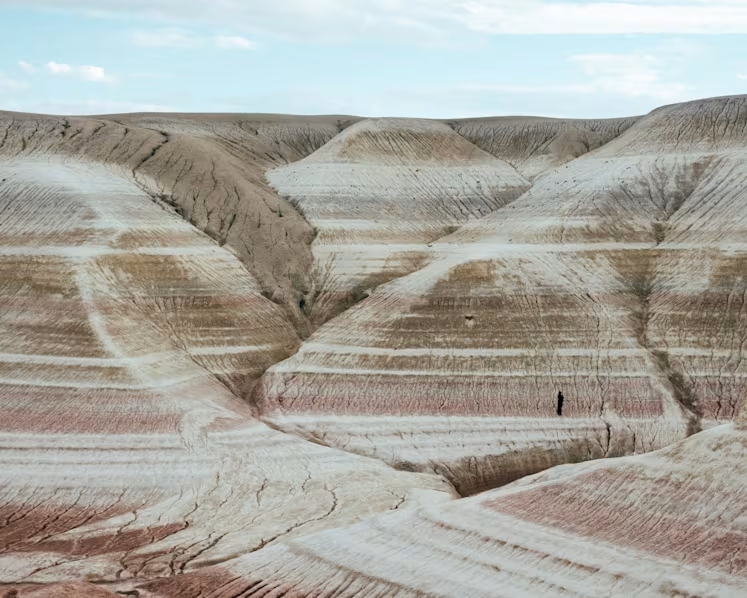
Nearby, Bokty Mountain – whose profile features on Kazakhstan’s 1,000-tenge banknote – seems to have been christened by the same particularly hungry geologist. Meaning “pie” in Kazakh, a reference to the bands of contrasting white, ochre, red and grey rock across its slopes, Bokty is an isolated mass rising about 165m from the otherwise flat surroundings.
MANGYSTAU: 過去、現在與未來
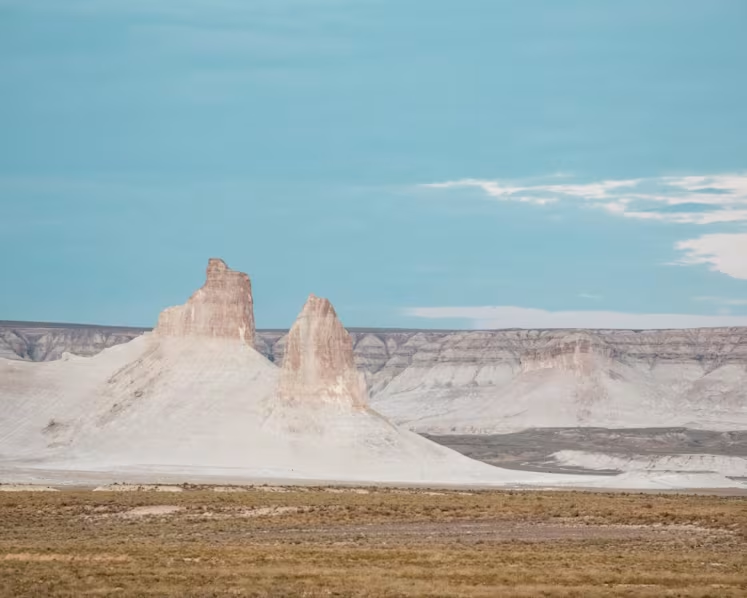
最終,這片沙漠聚集成曼格斯塔州最著名的景觀:波茲吉拉的白色峭壁與石灰岩地形,呈現出龐大而具雕塑感的形態。
兩道巨大的石灰岩碎片——被稱為「獠牙」——成為地區的標誌圖像;而龍脊則橫跨高原,如同某種巨型化石生物嘅鋸齒形背脊般延展。
遠處的景觀由一連串山脊、塔群和崖壁組成,延伸向幾近無法想像嘅地平線;喺呢啲景致之中,我哋嘅最後一晚就喺某個地方安營。
From the ancient Tethys Sea to the people who learnt to navigate its exposed seabed, from Silk Road travellers and pilgrims to the communities that have lived here for generations, Mangystau has continually taken on new chapters.
Now, increasing numbers of travellers from around the world are arriving to experience a part of the world that has long been remote and difficult to reach.
International attention is growing too, including through Jackie Chan’s Armour Of God franchise, whose latest instalment was filmed here and is due for release in 2027. New tourism infrastructure is also planned around Bozzhyra and elsewhere in the region. These plans have inevitably prompted opposition from locals concerned about how development could affect the ecosystem, especially in a region whose appeal rests partly on the integrity of its fragile desert environment.
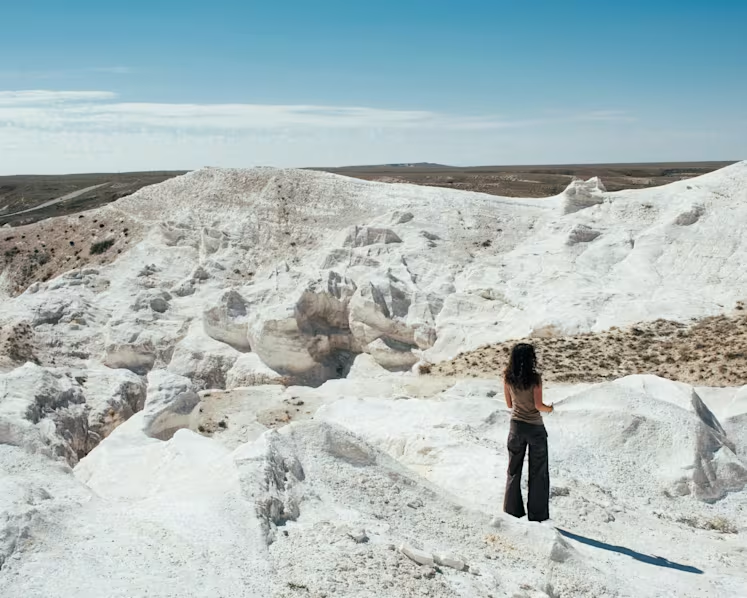
Having travelled through Mangystau by 4WD, sleeping in tents and yurts, eating dinners cooked at the back of a car and adjusting our plans to the whims of the weather, I also came to feel that how one experiences this landscape matters as much as seeing it.
The time spent with local guides and drivers, learning how they navigate the terrain and understand their relationship with it, made Mangystau feel less like a collection of spectacular geological sites and more like a place shaped by generations of living alongside its extremes.
A quick drive to Bozzhyra, a few photographs and a night in a luxury hotel might make the region more accessible, but it cannot offer the same kind of encounter.
Travel at this pace demands patience, resourcefulness and a willingness to relinquish control; it leaves you not simply with images of a place, but with a deeper sense of your own smallness within it.
As destinations like Mangystau enter their latest chapter attracting more and more visitors, concerns about ecological damage and overtourism obviously exist, alongside concerns of the gradual reduction of a complex landscape to a handful of photogenic stops.
Development need not be incompatible with conservation, but it should not erase the conditions that allow travellers to engage with Mangystau on its own terms.